The Taj Mahal: Love, Marble, and the Secrets Behind World Architecture's Greatest Icon
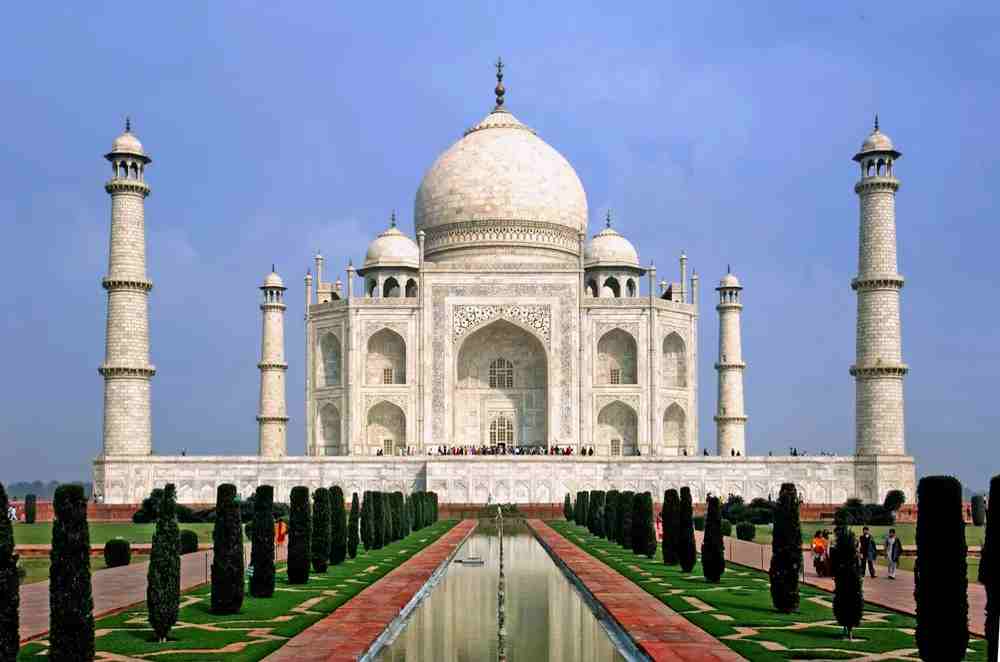
There is a brief moment just before dawn in Agra when the morning mist hangs low over the Yamuna River. As the first light catches the grand white dome of the Taj Mahal, the translucent marble shifts from a soft, pearlescent pink to a glowing amber.
It is one of the most celebrated sights in human history, but seeing it in person reveals a simple truth: no postcard or screen can quite capture its true presence.
Every year, between 7 and 8 million visitors from every corner of the globe travel to Agra, India, to stand before this 17th-century masterpiece. While it is universally recognized as an enduring tribute of love commissioned by the Mughal Emperor Shah Jahan for his favorite wife, Mumtaz Mahal, the Taj Mahal is far more than a romantic monument. It is a masterclass in Mughal architecture, an engineering marvel full of optical tricks, and a living cultural hub that anchors the local community to this day.
The Human Story: Grief, Royalty, and 20,000 Skilled Workers
To understand why the Taj Mahal exists, you have to look past the stone and into a human tragedy.
In 1631, Mumtaz Mahal (born Arjumand Banu Begum) died due to complications while giving birth to her fourteenth child in Burhanpur, a military outpost hundreds of miles south of Agra. Shah Jahan, the fifth emperor of the Mughal Dynasty, was reportedly so consumed by grief that court chronicles record him retreating into isolation for months, emerging with graying hair and a transformed demeanor.
Determined to construct a earthly representation of Paradise for her resting place, Shah Jahan brought together the finest talent from across Asia and Europe. Construction began around 1631 and spanned over two decades, wrapping up around 1648 for the main tomb, with the surrounding gardens, gates, and outer courtyard completed by 1653.
Contrary to the common belief that this was merely built by an army of nameless forced laborers, the project functioned as a massive, highly organized guild. Over 20,000 master stone-carvers, calligraphers, dome builders, inlay artists, and engineers were brought together under a council of architects led by Ustad Ahmad Lahori, the chief imperial architect. Artisans came from Persia, Central Asia, the Ottoman Empire, and across the Indian subcontinent, living in a purpose-built settlement nearby called Taj Ganj—a neighborhood that still exists today.
💡 Myth vs. Reality: Did Shah Jahan Chop Off the Workers' Hands?
One of the most widespread myths surrounding the Taj Mahal is that Shah Jahan had the hands of the artisans chopped off (or their eyes gouged out) so they could never build anything equally beautiful.
There is zero historical evidence for this story. It originated as local folklore centuries later. Historical financial records show that artisans signed legal contracts, were paid well, and many went on to work on other major royal projects, such as the Red Fort and Jama Masjid in Old Delhi.
Architectural Genius: Illusions, Symmetry, and a Surprising Asymmetry
The Taj Mahal represents the absolute peak of Mughal architecture, a style that seamlessly blended Persian, Islamic, and Indian design traditions. Every line, arch, and gateway was engineered with deliberate mathematical precision.
1. The Quadripartite Garden (Charbagh)
The mausoleum sits within a massive 300-meter square garden organized into four quadrants by raised pathways and water channels. Known as a charbagh (a four-quartered paradise garden), this layout represents the Islamic concept of the four rivers of Paradise mentioned in the Quran. Rather than placing the tomb in the exact geometric center of the gardens—which was standard Mughal practice—the architects placed it along the northern bank of the Yamuna River, using the open sky and water behind it to heighten its dramatic silhouette.
2. Built-In Earthquake Protection
If you look closely at the four minarets (towers) surrounding the main dome, you will notice they do not stand at a strict 90-degree angle. They lean slightly outward by about two degrees. This was an intentional structural safeguard: if an earthquake ever struck Agra, the towers were designed to collapse away from the central mausoleum rather than crushing the main dome.
3. The Great Optical Illusion
When you approach the main gateway (Darwaza-i-Rauza), the Taj Mahal appears impossibly massive, filling your entire field of view. As you walk through the doorway toward the gardens, the building appears to shrink in size—a clever optical effect created by the framing arches that draws visitors into the space.
The Broken Symmetry: A Historical Correction
Popular descriptions often claim that the entire Taj Mahal complex is completely symmetrical down to the last detail. While this is true for the layout, the gardens, the red sandstone mosque on the west, and its identical replica building (Jawab) on the east, there is one major exception.
Inside the main octagonal hall, Mumtaz Mahal’s cenotaph sits directly in the exact geometric center. However, when Shah Jahan died in 1666, his son and successor, Aurangzeb, chose to inter his father inside the same chamber right beside Mumtaz. Shah Jahan’s larger cenotaph was placed to the left, making his grave the only asymmetric element in the entire complex.
Note on Cenotaphs vs. Actual Graves: The elaborate carved marble markers seen in the upper chamber are cenotaphs (empty, symbolic monuments). Out of religious modesty, the real tombs of Mumtaz Mahal and Shah Jahan lie in a quiet, unadorned subterranean crypt directly beneath the main floor.
Craftsmanship: The Magic of Pietra Dura
The walls of the mausoleum are constructed from bricks clad in high-grade translucent white marble quarried from Makrana in Rajasthan, roughly 200 miles away. What elevates this marble from a simple surface into a work of art is parchin kari (commonly known in Western art history as pietra dura).
Inlay artisans used fine chisels to carve intricate floral scrolls and geometric patterns directly into the smooth marble surface. They then hand-cut semi-precious and precious stones—including lapis lazuli from Afghanistan, turquoise from Tibet, carnelian from Saudi Arabia, and jasper, jade, and malachite—and fitted them seamlessly into the carved grooves using a secret plant-based resin adhesive.
In addition to floral motifs, the grand arches feature sprawling calligraphic inscriptions of Quranic verses carved from black marble. To ensure the Arabic script appears uniform when viewed from the ground, the calligraphers deliberately scaled up the lettering as it reached higher up the archway.
Practical Guide: Fees, Rules, and Logistics
Visiting one of the world's most famous sites requires a bit of practical planning to avoid unnecessary delays at the security checkpoints.
Ticket Pricing Overview
Prices are tiered based on nationality and age. If you wish to enter the main inner sanctum to see the cenotaphs, you must purchase a supplementary ticket.
Essential Visiting Rules & Security Checklist
- Friday Closure: The Taj Mahal is closed to the general public every Friday because the red sandstone mosque within the complex remains an active house of worship for local Friday prayers.
- Prohibited Items: Security screening at the East and West gates is comparable to airport security. Big backpacks, tripods, phone chargers/power banks, food, knives, tobacco, and drones are strictly banned inside. Carry only a small handbag or daypack containing essential personal items, water, a phone, and a camera.
- Dress Code & Etiquette: While there is no rigid religious dress code enforced outdoors, respectful attire covering shoulders and knees is recommended. Inside the main mausoleum chamber, shoes must either be removed or covered with plastic/fabric shoe covers, and photography is strictly forbidden inside the crypt room.
Timing Your Visit: Beating the Heat and Fog
Agra experiences distinct seasonal shifts, and choosing when to arrive will dramatically affect your overall experience.
     BEST VISITING WINDOWS (Agra, UP)

     Oct  Nov  Dec  Jan  Feb  Mar  Apr  May  Jun  Jul  Aug  Sep
    [==== FAIR ====][=== PEAK ===][==== FAIR ====][= MONSOON =]
                    ^           ^
               Cool & Clear  Morning Fog
               (Ideal Air)  (Delay Views)
1. Winter (November to February) — Peak Season
- The Experience: Temperatures drop to a comfortable range between 10°C and 22°C (50°F to 72°F), making walking outdoors pleasant.
- What to Watch Out For: Dense morning winter fog (and atmospheric smog) frequently sweeps over Northern India in December and January. On foggy days, the Taj Mahal can be entirely invisible at 6:00 AM, only clearing up after 10:00 AM.
2. Summer (March to June) — High Heat
- The Experience: Daytime temperatures in Agra frequently exceed 40°C to 45°C (104°F to 113°F).
- What to Watch Out For: The white marble plinth gets extremely hot under direct sunlight. Even with shoe covers or cloth mats laid out on the pathways, walking across the open courtyards at noon can be intense. If visiting in summer, go right when the gates open at dawn.
3. Monsoon (July to September) — Quiet & Lush
- The Experience: Rains wash away heat and dust, turning the charbagh gardens vibrant green. Crowds are much smaller compared to winter.
- What to Watch Out For: Humidity can be high, and sudden downpours can disrupt outdoor photography.
Exploring Agra Beyond the Taj Mahal
Agra is well-connected to New Delhi via the high-speed Gatimaan Express train (around 1 hour 40 minutes) and the Yamuna Expressway (a smooth 3-to-4-hour drive).
While the Taj Mahal is the main attraction, Agra hosts three separate UNESCO World Heritage sites, making it worth more than a quick day trip:
- Agra Fort: Located just 2.5 kilometers northwest of the Taj, this sprawling red sandstone fortress served as the main seat of the Mughal Dynasty for generations. It is also where Shah Jahan spent his final eight years under house arrest by his son, gazing out at the Taj Mahal from the marble balcony of the Musamman Burj.
- Fatehpur Sikri: Situated about 40 kilometers outside the city, this magnificent red sandstone ghost city was built by Emperor Akbar in the late 16th century to serve as his capital before being abandoned due to water shortages.
- Mehtab Bagh (The Moonlight Garden): Located directly across the Yamuna River from the Taj Mahal, this restored garden alignment offers an incredible, uncrowded viewpoint of the monument at sunset without having to go through main temple security.
A Living Human Legacy
The Taj Mahal is not merely an isolated stone monument frozen in time. It sits at the center of an entire regional economy. Thousands of local families—from cycle-rickshaw drivers and licensed tour guides to fifth-generation stone artisans living in Taj Ganj who still practice the exact same parchin kari marble inlay methods—rely on the monument for their livelihoods.
When you step onto the cool marble platform and watch the shadows stretch across the garden, you aren't just looking at an icon of India—you are standing inside a centuries-old dialogue between deep personal loss, artistic ambition, and human craftsmanship that still speaks clearly to us today.