The Enigma of Giza: History, Engineering, and the Mysteries of the Great Pyramids
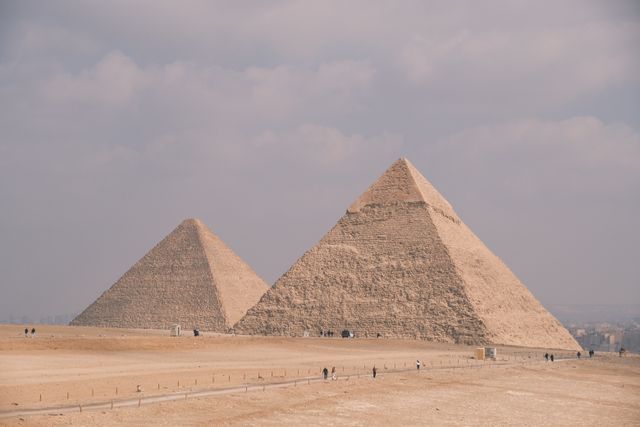
One of the most intensely mysterious, deeply debated, and persistently captivating topics in human history remains the construction of the Great Pyramids of Giza. For centuries, the sheer scale, the hyper-precise geometric orientation, and the complex engineering required to assemble these massive monuments have baffled historians, architects, structural engineers, and archaeologists alike. How did an ancient society, operating completely without the benefit of industrial-era machinery, electrical power, or advanced material science, achieve such staggering architectural perfection? This relentless quest for definitive answers has birthed countless theories, ranging from conventional archaeological explanations rooted in human organization to speculative concepts involving advanced lost civilizations or, as some fringe theorists famously suggest, extraterrestrial intervention.
Why Are the Pyramids Considered Miracles of Human Engineering?
To fully grasp why the Pyramids of Giza occupy such a central, untouchable place in our collective imagination, we must first confront the sheer, breathtaking audacity of their construction. They are not merely massive royal tombs built for deceased pharaohs; they are monumental, enduring expressions of supreme political power, bureaucratic organization, and astonishing technical skill. When we strip away the layers of pop-culture myth and cinematic exaggeration, we are left with raw physical challenges that require a modern understanding of physics, mechanics, and material science to truly appreciate.
1. The Colossal Weight of the Building Blocks
The pyramids are comprised of millions of individual stone blocks, ranging from massive, heavy limestone casings to even larger granite monoliths hauled from hundreds of miles away. These individual blocks are estimated to weigh anywhere from 2 to a staggering 80 metric tons.
If we adhere strictly to the timeline and tools provided by traditional archaeology, these colossal structures were completed during an era when the primary metal tools available to workers were soft copper chisels and stone hammers. The physical feat of extracting these monumental stones from quarries, transporting them across uneven desert terrain, and elevating them to structural heights reaching nearly 500 feet defies simplistic explanation. Without the mechanical advantage provided by hydraulic lifts, steel cables, pulleys, or heavy-duty construction vehicles, the manual labor required feels almost superhuman in its raw scope and endurance.
2. The Total Absence of the Wheel
Perhaps the most perplexing detail in the academic study of pyramid construction is the historical consensus that the wheel had not yet been invented or introduced in Egypt during the Old Kingdom. This historical reality creates a massive logistical headache for anyone trying to reverse-engineer the build.
Without wheels, the ancient Egyptians could not utilize carts, wagons, or any rolling chassis to haul multi-ton stones across the landscape. If the wheel was truly absent from their engineering toolkit, how were these heavy loads moved efficiently? Mainstream historians suggest a combination of massive wooden sledges, specially lubricated tracks of wet sand, and overwhelmingly coordinated human labor. Yet, the sheer operational efficiency required to maintain such an unprecedented workflow—moving multi-ton stones across miles of burning desert day after day—remains a subject of intense, ongoing academic debate.
3. The Astonishing Precision of Stone Cutting
Beyond the immense logistics of moving raw weight lies the astonishing craftsmanship of the masonry. The giant stone blocks are fitted together with such incredible accuracy that, even after thousands of years of shifting tectonic plates, severe weathering, and relentless erosion, it is still notoriously difficult to slide even a thin credit card between them.
This level of meticulous joinery suggests a mastery of geometry, site planning, and tool precision that seems entirely out of step with the crude implements typically associated with the Bronze Age toolkit. Some independent observers and alternative historians argue that the stone surfaces show micro-grooves and tool marks pointing toward high-speed drilling or cutting techniques that closely resemble modern laser or ultrasonic technologies, fueling the enduring mystery of how such surfaces were achieved with such uniform consistency across millions of individual stones.
The Riddle of the Great Pyramid’s Interior
Adding deeply to the historical enigma is a strange architectural anomaly: when the first systematic, documented explorations of the Great Pyramid’s interior were conducted, no mummy was found within the massive granite sarcophagus inside the King’s Chamber.
This total absence of a royal body has sparked a wealth of modern inquiry and alternative theories. If the primary, undisputed purpose of this massive structural undertaking was to serve as a secure royal burial site for Pharaoh Khufu, why was the chamber completely empty?
Was it simply robbed down to the last scrap by clever ancient tomb raiders who bypassed all the security blocks, or was its primary function something entirely different—perhaps a symbolic monument, a massive mathematical repository, an ancient geodetic marker, or a specialized acoustic structure designed for a ritual purpose that modern man has yet to fully decipher?
The Search for Answers: Who Built the Pyramids?
Because of the massive gaps in our historical knowledge and the sheer physical impossibility of the feat using conventional tools, the fundamental questions of "Who" and "How" remain wide open in the public consciousness. Among the most popular, albeit controversial, theories driving popular culture are:
- The Advanced Lost Civilization: Proponents of this theory argue that a technologically advanced civilization with capabilities superior to our own existed long before the ancient Egyptians, leaving behind a technological blueprint that was later inherited, copied, or partially replicated by the pharaohs.
- The Giant Theory: Some ancient folklore and alternative historical hypotheses suggest that the structures were built by giants—large humanoid entities who possessed the physical strength required to manipulate massive stones without needing the complex, large-scale logistical chains ordinary humans would rely on.
- The Extraterrestrial Hypothesis: Perhaps the most famous and widely debated theory in pop culture, this posits that non-human entities intervened in human history, utilizing advanced anti-gravity propulsion or levitation technology to construct the monuments as permanent waypoints or grand testaments to their presence on Earth.
- A Revisionist Chronology: Some independent researchers argue that the pyramids are significantly older than current mainstream dating suggests, potentially placing their original construction during an era of global geological or human development that modern archaeology has yet to uncover or accept.
Could We Build the Pyramids Today?
When people look at the ancient pyramids, a common question arises: Could modern human civilization rebuild them today?
In short, the answer is a resounding and absolute "Yes." The true mystery of the pyramids is not that they are fundamentally impossible to build—it is that they are impossible to build the way we think they were built at that specific point in history. With the incredible benefit of modern engineering, advanced logistics, and heavy machinery, building a pyramid today becomes an exercise in budgeting resources and allocating time rather than proving a lack of human capability.
To construct an exact replica of the Great Pyramid today, modern contractors and engineers would utilize:
- CNC Precision: Computer Numerical Control machines and diamond-tipped wire saws would cut the millions of limestone blocks with laser-guided accuracy, ensuring perfectly flat, matching surfaces for every single block before it even reaches the site.
- Modern Freight Logistics: Instead of human-pulled sledges and wet sand, we would utilize heavy-duty diesel freight trains or automated heavy transport trucks to bring the stones directly from regional quarries straight to the Giza plateau.
- Lattice Boom Cranes: High-capacity tower cranes and heavy hydraulic cranes, capable of lifting hundreds of tons into the air with ease, would completely replace the labor-intensive mudbrick ramp systems that likely cost thousands of lives in antiquity.
By employing these advanced modern tools, our civilization could recreate the Great Pyramids in a mere fraction of the time, proving once and for all that while the original feat was a stunning testament to the organizational genius and sheer willpower of the ancient Egyptians, the underlying geometry and architecture are firmly within the grasp of modern human engineering.
Travel, Context, and Modern Surrounds
For travelers and history enthusiasts interested in witnessing these engineering marvels firsthand, you do not need to be an intrepid desert explorer braving harsh conditions. The Pyramids of Giza are located directly on the modern doorstep of Cairo.
In fact, the massive urban sprawl of Egypt's capital has expanded so aggressively over the decades that you can actually look out from the balconies of nearby modern hotels and restaurants and see the stark, striking silhouettes of the pyramids cutting across the horizon against the setting desert sun. This surreal visual contrast—ancient, weathered stone meeting the bustling, high-tech energy of a modern metropolis—serves as a striking visual representation of deep time itself.
The Lost "White" Pyramid Aesthetic
An interesting historical detail that is frequently overlooked by casual visitors is that the Great Pyramid was not originally the tan, weathered, stepped structure we see standing today. Upon its completion around 4,500 years ago, the entire structure was meticulously encased in smooth, polished white limestone blocks, capped off with a brilliant golden capstone known as the pyramidion.
Under the blazing desert sun, it would have presented a blindingly bright, mirror-like reflective surface that could be spotted clearly from miles away across the Nile valley. Over the centuries, these fine limestone casings were systematically stripped away by later rulers and local populations to build mosques, fortresses, and palaces in nearby Cairo, leaving behind the stepped, rugged inner core that we observe today. Despite this loss of its outer shell, it has endured for millennia, surviving countless earthquakes, regional conflicts, and the relentless, abrasive erosion of harsh desert storms, standing proudly as an unyielding witness to the long passage of human history.
Conclusion: The Enduring Legacy of Giza
Whether you are a dedicated student of ancient history, a healthy skeptic of alternative theories, or simply a curious global traveler seeking adventure, the Giza pyramids represent an absolute mandatory stop on any life journey. While there is no hard, definitive archaeological evidence to prove the more speculative theories involving extraterrestrials or giants, the enduring mystery surrounding their creation serves an important purpose—it forces modern humanity to deeply appreciate the sheer endurance, planning, and ambition of our ancestors.
Whoever built them, and whatever their precise original purpose may have been, they remain an undeniable, awe-inspiring miracle of human civilization. Before you embark on your own personal journey to Egypt, make sure to read up on the latest archaeological discoveries and tunneling findings, as the historical story of Giza continues to evolve even today. Whether you head there for the rich history, the thrill of adventure, or just to marvel at their unimaginable physical scale, you are guaranteed to walk away with a profound, lasting sense of wonder.