Navigating the Atlas: The Unique Realities, Logistics, and Travel Wonders of Landlocked Nations
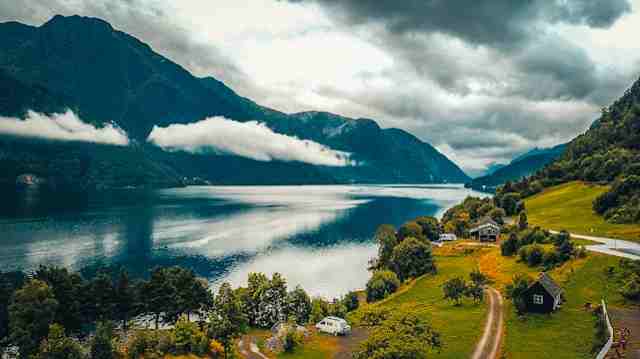
Where the vast majority of the sovereign countries in the world enjoy direct access to a sea or an open ocean, there remains a fascinating group of nations that do not share this maritime privilege. These are known as landlocked countries. As of 2026, there are over 40 sovereign states across the globe completely surrounded by other landmasses, existing within a unique, tightly bound geopolitical, economic, and logistical bubble.
Understanding Landlocked Nations: Beyond the Map
Being landlocked is not merely a dry geographical designation found in a school textbook; it is a profound, defining characteristic that fundamentally shapes a nation’s economy, foreign policy, transport logistics, and cultural interactions with the outside world.
When a country lacks a direct coastline, it loses the immediate, natural advantage of maritime trade routes, which have historically served as the vibrant lifeblood of global commerce. Because ships cannot dock directly on their borders, these states must meticulously navigate complex diplomatic relationships with their neighboring countries to secure transit corridors for all their imports and exports. Every barrel of oil, every manufactured machine, and every consumer good must traverse foreign soil before reaching its final destination.
Regional Breakdown: Landlocked Countries Across the Globe
To truly grasp the scope of landlocked nations, we can examine how they are distributed across different continents, each region presenting its own distinct terrain and historical background.
1. Countries in Africa
Africa contains a significant concentration of landlocked nations, many of which face unique logistical hurdles regarding modern infrastructure, regional stability, and long-distance trade corridors.
- Botswana
- Burkina Faso
- Burundi
- Central African Republic
- Chad
- Eswatini
- Ethiopia
- Lesotho
- Malawi
- Mali
- Niger
- Rwanda
- South Sudan
- Uganda
- Zambia
- Zimbabwe
2. Countries in Asia
The Asian landlocked states are remarkably diverse, ranging from the high-altitude, freezing mountain terrains of the Himalayas to the vast, arid steppes and ancient trade routes of Central Asia.
- Afghanistan
- Armenia
- Azerbaijan
- Bhutan
- Kazakhstan
- Kyrgyzstan
- Laos
- Mongolia
- Nepal
- Tajikistan
- Turkmenistan
- Uzbekistan
3. Countries in Europe
Europe’s landlocked countries are often defined by their dramatic mountainous landscapes, dense forests, or their historical position right at the heart of the continent’s centuries-old conflicts, treaties, and cultural exchanges.
- Andorra
- Austria
- Belarus
- Czechia
- Hungary
- Liechtenstein
- Luxembourg
- Moldova
- North Macedonia
- San Marino
- Serbia
- Slovakia
- Switzerland
- Vatican City
4. Countries in South America
Though South America is predominantly defined by its massive, sweeping coastlines along both the Atlantic and Pacific oceans, it holds two significant landlocked states nestled within the continent's interior:
- Bolivia
- Paraguay
The Complexity of Isolation: Double Landlocked States
While being landlocked is a recognized logistical challenge, being "double landlocked" represents an entirely different level of geopolitical complexity.
A double landlocked country is defined as a nation that is surrounded exclusively by other landlocked countries. This means that to reach an open ocean from these states, a traveler or cargo shipment must cross at least two international borders managed by different sovereign neighbors.
Currently, only two nations in the entire world hold this unique status: Liechtenstein in Central Europe and Uzbekistan in Central Asia. For these exceptional nations, every single international trade route, supply chain, and transport path is entirely dependent on the political goodwill, economic cooperation, and infrastructure maintenance of their surrounding neighbors. If relations sour with adjacent states, these double-landlocked countries can face severe economic isolation.
Enclaves: Surrounded by a Single Country
Taking isolation a step further, some unique nations exist in a state of absolute enclave status, meaning they are completely enclosed within the borders of only one other sovereign country.
- San Marino and Vatican City: Both of these microstates are complete enclaves entirely within Italy, representing unique, deeply preserved historical, religious, and cultural pockets that have survived centuries of European shifting.
- Lesotho: Surrounded entirely by South Africa, Lesotho’s topography is intensely mountainous, and its economic reliance on South African infrastructure, currency pegging, and transit routes is absolute.
Landlocked vs. Island Destinations: Which is Better for Travel?
When we sit down to plan a trip, the physical geography of the destination dictates the very rhythm, pace, and nature of the journey. Traveling to a landlocked country offers a fundamentally different experience compared to visiting an ocean-bound island state.
The Deep Appeal of the Road and Rail Trip
One of the greatest advantages of visiting a landlocked country is that you are never restricted solely to the skies or the seas; you can reach them by land. If your destination shares borders with a friendly neighboring state, the entry process can be remarkably smooth.
A road trip often costs significantly less than a long-haul flight or a complex ship journey, and it offers an incredible sense of personal freedom that is hard to replicate. You can pack your own car—bringing along family, friends, or even pets—and drive right across the border, provided you have the proper vehicle paperwork, international insurance, and customs documents in order.
Beyond private cars, a train or long-distance bus journey into a landlocked region is often an exceptional choice. These ground transport modes provide a much more scenic, immersive experience. A window seat on a train lets you watch the landscape shift dramatically: you can see the architecture change, observe subtle shifts in local culture, and watch rural terrain evolve as you cross borders—an intimate perspective impossible to experience from thirty thousand feet in the air.
However, ground travel requires patience. It can be remarkably time-consuming. Travelers must account for practical needs like finding clean rest stops, motels, and dining options along the route. Furthermore, in certain regions of the world, road security can be a genuine concern, requiring thorough planning and strict adherence to official travel advisories. Countries like Switzerland are globally celebrated for road travel precisely because their sweeping alpine sceneries demand to be witnessed at a slower, deeply personal pace.
The Unique Challenge of the Island State
On the flip side, traveling to an island state presents a different set of logistical parameters. You typically have only two primary choices: a maritime journey via boat or ferry, or an airborne flight.
Of course, modern engineering has introduced fascinating exceptions, such as the Channel Tunnel linking France and the United Kingdom via high-speed rail under the English Channel. For travelers who grew up far inland and have never witnessed an open ocean, visiting an island state can be a deeply transformative experience, where the endless horizon of the sea becomes the central memory of the trip.
Why Knowing Geographical Status Matters for Logistics
Understanding whether a destination is landlocked or coastal is essential for smart trip planning. Knowing a country is landlocked opens up multiple alternative transit options, such as trains, buses, and scenic self-drive routes, each offering deep cultural immersion.
Conversely, knowing a destination is an island prepares you for maritime adventures like multi-day ferry rides or scenic boat crossings. The chosen mode of transportation often sets the psychological tone for the entire vacation long before you even unpack your bags at the hotel.
Surprising Wonders of Landlocked Geography
It is a common misconception that because landlocked countries lack ocean beaches, they lack natural beauty. In reality, some of the most breathtaking tourist destinations on Earth are completely landlocked.
- Switzerland: Widely hailed as "heaven on earth," Switzerland features crystal-clear, majestic alpine lake shores that rival any tropical ocean beach in terms of serenity and visual drama.
- Nepal: Home to the towering peaks of the Himalayas, including the legendary summit of Mount Everest, drawing mountaineers, trekkers, and adventurers from every corner of the planet.
- The Caspian Sea Enigmas: Interestingly, three of the five countries surrounding the massive Caspian Sea—Turkmenistan, Azerbaijan, and Kazakhstan—are technically landlocked, proving that landlocked regions can still border massive, sea-like bodies of water rich in marine biodiversity and history.
- Vatican City: The smallest independent state in the world, drawing millions of visitors not for beaches, but because it serves as the spiritual and architectural heart of global Catholicism.
The Economic and Strategic Realities
From a purely economic perspective, being landlocked introduces heavy structural hurdles. Because massive cargo container ships cannot directly dock and unload goods within their borders, international logistics costs rise significantly.
Imported goods must first be offloaded at a seaport in a neighboring transit country and then hauled inland via trucks or freight trains, adding extra days and considerable expense to every commercial transaction. This extra overhead can sometimes stifle a landlocked nation's export competitiveness on the world stage.
However, from a national defense and security perspective, this exact geographical challenge can sometimes translate into a strategic advantage. Being entirely surrounded by land provides natural territorial barriers, mountain ranges, and controlled border checkpoints that can often be monitored more easily than an expansive, porous coastline vulnerable to unauthorized maritime entry.
Final Thoughts on Global Geography
Whether you are navigating the high mountain passes of a landlocked alpine state or catching a ferry across rolling ocean waves to a remote island, every type of geography offers its own distinct rewards and lessons.
Understanding the unique layout, history, and logistical reality of the land you are visiting is always the first vital step toward a successful, stress-free journey. Before you plan your next getaway, take a moment to check whether you will be relaxing on a sun-drenched coastal beach or embarking on a high-altitude mountain retreat—and plan your route with the spirit of discovery firmly in mind!